


Why We Built Anchored Couples: A Life of Service, a Partnership with Purpose
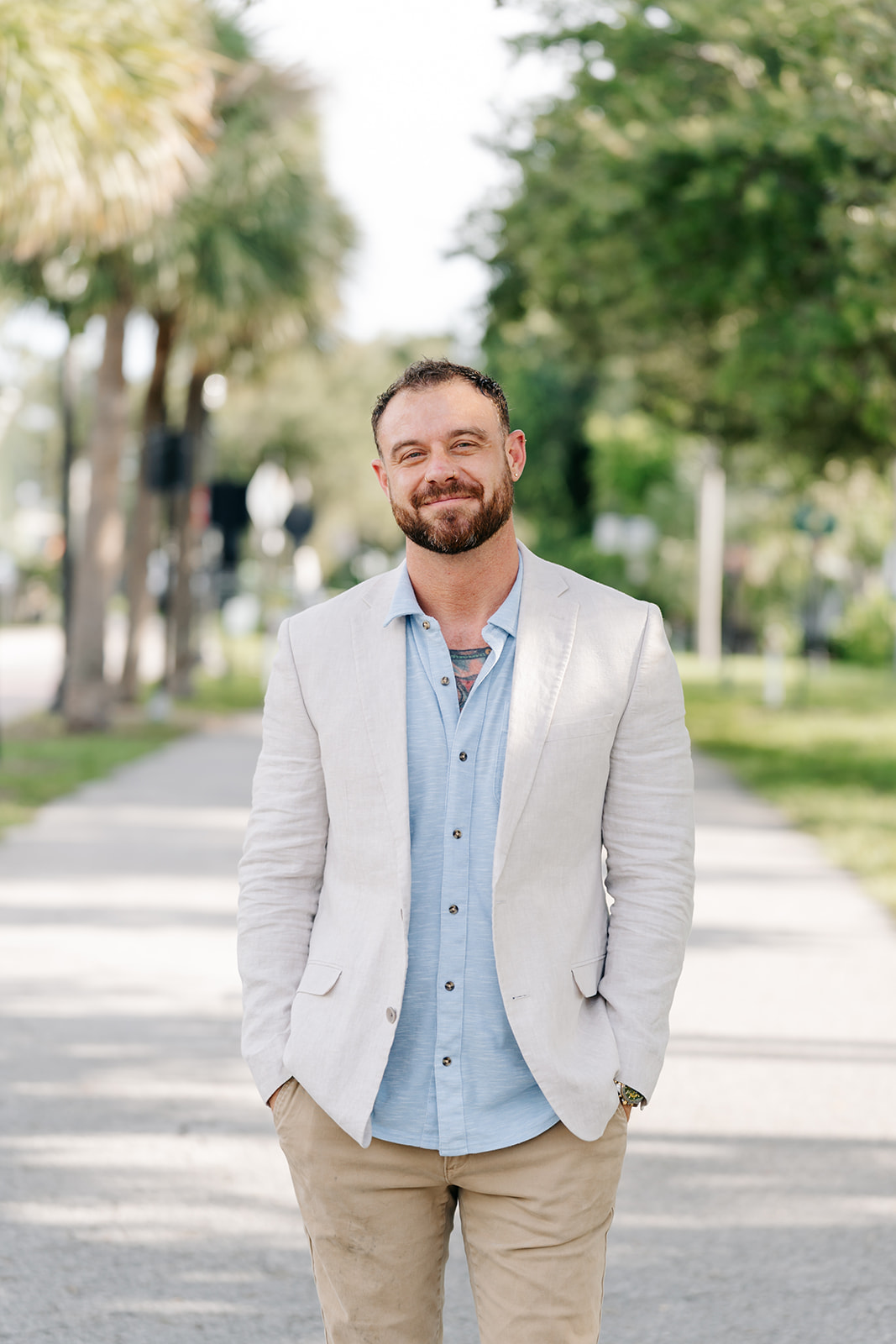
By Vince Torrente, Founder of Anchored Couples
I spent years craving a good relationship without knowing how to get one.
I think it’s easy to absorb the idea that a great relationship is something you fall into. Romantic comedies give us the meeting, the chemistry, the grand gesture, and then the credits roll. Apparently the dishes and the difficult conversations happen in the sequel.
What I had to learn is that a good relationship takes active participation. Finding someone you love is a beginning. You still have to build something together: learn how to understand each other, say what you need, and come back when a conversation goes sideways. You get a good relationship by helping build one.
I wanted to feel understood. I wanted to offer that same care to someone I loved. But wanting a healthy partnership and knowing what to do when you’re hurt, frustrated, or disconnected are different things.
Learning that has shaped both my personal life and my work as a couples therapist. It’s also part of why my wife, Hannah, and I created Anchored Couples.

Service has been a thread through both our lives
I’m a United States Navy veteran. I saw my time in the Navy as an opportunity to contribute, to serve my country and my community, and to be useful to something and someone beyond myself.
That desire stayed with me as I moved into mental health work. I worked with children in elementary and middle schools, with fellow veterans at the Baltimore VA, and later with people navigating addiction and recovery, as well as couples trying to find their way back to each other.
Across those settings, I kept returning to the same sense of purpose: being present with people, understanding what they were facing, and helping them to find a better way forward.
Hannah has spent more than a decade working in healthcare directly with patients and their families, both in hospital settings and with people in their own homes. Supporting other people has been a consistent part of her professional life, too. It’s work we both find meaningful, and where we feel useful and able to contribute.
We bring that shared commitment into Anchored Couples. I lead the clinical work, and Hannah, our Director of Operations, helps make the experience of getting care clear and supportive. We want people to feel cared for from their first contact through their final session.
That’s a big part of why we started our own private practice. We feel deeply connected to this work, and we wanted to take responsibility for the whole experience, from the first question someone sends us to the work we do together and how we bring it to a close. We care about those details. They’re part of the care, too.
Finding the work that fits
Over roughly four years of working with couples, I’ve found the place where my professional skills and personal experience feel most useful together.
I care deeply about helping two distinctly different people understand what’s happening between them. Often, both want closeness, but the way they try to reach each other leaves them feeling further apart. Helping them make sense of that, and practice something different, is work I feel strongly connected to.
My clinical training informs that work. My own relationships have given it personal meaning.
I’ve had to learn how to build a more honest, positive relationship with myself: how to understand my needs, take responsibility for my part, and become more capable of offering care without losing my own voice. Finding a partner in Hannah who shares a commitment to that kind of growth has been deeply meaningful.
We practice the principles I talk about in therapy. We still have difficult moments. We’re two deeply imperfect people who get tired, get frustrated, and sometimes say things we don’t mean. Then we have to work through what happened. We’re real people doing this alongside the rest of life, not a glittering example of a couple who has it all figured out. Knowing a skill doesn’t mean you always remember it when you’re upset, and we have to keep doing the work, too. Our relationship gives me a daily connection to why these skills matter.
And if you’d like a reminder that you still have things to work on as a couple, try starting a business together. Suddenly, the conversations about school pickup and sports schedules have company: Who’s handling the emails? What are we doing about marketing? Was that a business meeting, or did we just spend dinner discussing a website button? Apparently we felt our communication skills could use a few more opportunities to practice.

Being in service to each other
Something Hannah and I value is the idea of being in service to each other and to our children. We want to contribute to one another’s lives, to notice where care is needed, and to be people the other can turn toward.
Elbert Hubbard wrote, “Love grows by giving. The love we give away is the only love we keep.” [1]
That captures something I value: care becomes part of a relationship through what we actually give to each other. Sometimes that’s attention. Sometimes it’s taking something off the other person’s plate. Sometimes it’s making room for an honest answer you weren’t hoping to hear.
For me, that includes asking: What would help my partner feel supported? What am I bringing into this moment? Have I made room to understand them, and have I been honest about what I need?
Giving has to leave room for both people. A healthy partnership needs mutual care, boundaries, and the freedom to speak honestly. Being generous with each other can include a difficult conversation, asking for help, or recognizing that something needs to change.
That’s the kind of partnership we care about helping people build. A relationship where both people matter, and where caring for one another becomes something they can put into practice.
Loving your partner and liking who they are
I want friendship to have a place in this conversation too. Do you like your partner? Are you interested in what they think? Can you enjoy them without spending the whole time noticing what you wish they would do differently?
For many people, friendship is part of what draws them together in the first place. You want to hear the story. You want to know what made them laugh. You ask questions because you’re interested, rather than because you’re trying to establish who forgot to do something. Over time, it’s possible for the running of a shared life to crowd out some of that interest.
Dr. Orna Guralnik, the clinical psychologist and psychoanalyst featured in Couples Therapy, describes an important starting point: “coming to terms with the fact that your partner is different.” [2] That can sound obvious until the difference is inconvenient. They don’t rest the way you do. They don’t read a situation the same way. Something that feels small to you carries real weight for them.
In another conversation, she offers a different response to that discovery: “What is it? What can I learn from it?” [3] I like those questions. They leave room to meet the person in front of you instead of trying to turn them into a version of yourself who loads the dishwasher correctly.
For me, friendship in a partnership includes that willingness to keep learning who Hannah is. It means remembering that the person I love has an internal world I don’t automatically know, even when we’re living through the same day. There are things to appreciate and enjoy, not just problems to solve.
That doesn’t mean liking every habit, agreeing with every choice, or accepting harmful treatment. It means making room for difference while staying honest about your needs. A question worth returning to is: What do I genuinely like about this person, and have I let them know lately?

The impact reaches beyond the couple
A committed partnership should be one of the most stabilizing relationships we have. Yet many of us were never explicitly taught how to build or maintain one.
When couples develop more understanding and more useful ways to respond to each other, the possibilities reach into daily life. For parents, that includes what children see and experience at home: how adults handle disagreement, express needs, offer care, and repair after a difficult moment.
The skills we practice in our closest relationships can also shape how we relate to ourselves, our families, and the people around us. That wider impact is part of why this work matters so much to Hannah and me. We believe healthier partnerships can contribute to healthier homes and communities.
People often say you can’t pour from an empty cup. I think about what becomes possible when there is something left in it—maybe even enough that it overflows. When you feel supported, understood, and able to be honest at home, imagine the care you might have available for your children, a friend, or someone having a hard day. That isn’t a demand to give endlessly. We need care ourselves. It’s a picture of how being cared for can make more care possible beyond the two of you.
What we’re here to do
Our mission is to help couples understand one another, build practical relationship skills, and create a partnership they can turn toward with more honesty, confidence, and care.
We’ve built our approach around time to understand your relationship, an opportunity to experience working with me before committing further, and a focused course of therapy with shared goals. I want you to know what we’re working toward and develop skills you can use without me in the room.
This blog will be another place to share the ideas and practices that shape that work, alongside honest reflections on what it takes to bring them into everyday life.
Wanting to feel understood, offering that same care to someone you love, and being honest about your own needs takes skill. I believe those are skills people can learn. Helping couples learn them is why I do this work, and why Hannah and I are building Anchored Couples together.
If you’d like support with your own relationship, you’re welcome to reach out or book a free consultation through our website. We’d be glad to meet you.
Quotation sources
[1] Elbert Hubbard, The Note Book of Elbert Hubbard, passage on giving love. Read source
[2] Orna Guralnik, interview with Brittany Luse, It’s Been a Minute, NPR/WBUR. Read source
[3] Orna Guralnik, Fixable interview transcript, TED. Read source

